
SureFeed Microchip Pet Feeder Review
Contents

We like to make sure our fur babies have access to their food whenever they want but it can be difficult to tell if the dog is the one who has eaten all of the cat food or to figure out if my cat is eating his assigned portion and still begging for more.
Luckily, there is a great solution to this problem: A microchip feeder that only allows the pet with the chip on their collar to access the food dish. This way, the cat can eat all the food that is in his dish and neither pet ends up eating for two.
SureFeed Microchip Pet Feeder

Pros
- 6 months battery life
- Works with already existing RFID chip
- Pet weight management
- Prescription meds only fed to the right pet
- No pet can steal from another's food
Cons
- Not dishwasher safe
- No AC adapter
Overview
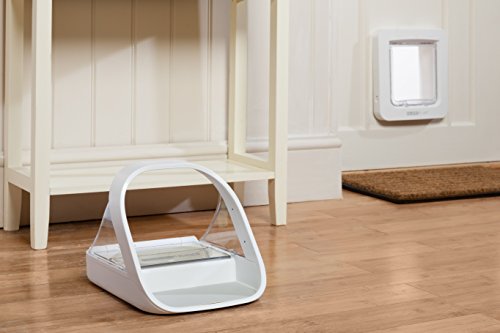 The SureFeed pet feeder can be programmed to a SureFlap RFID tag on your cat’s collar or their internal microchip and the lid will only open for the cat (or dog) that has been assigned to that feeder.
This makes it a great addition for multi-pet households where one pet tends to eat much more than their fair share, leaving them overweight and the other pets hungry.
If the designated cat isn’t at the dish, the lid stays closed, preventing any other pets from accessing the dish. This lid also seals the bowl so that the food inside stays fresh longer and prevents pests such as ants and flies from getting into your pet’s food.
Each feeder includes two removable polypropylene bowls (one with a divider and one without) that are compatible with wet or dry food and that can hold up to 13.5 fluid ounce of wet or 2.4 cups of dry food each.
The dishes come in a range of colors to make it easy for multi-cat households to be sure which feeder has been assigned to which cat and each unit features a silicone mat to place underneath the feeder to help keep your living space tidy. Powered by 4-C batteries, the battery life varies depending on use, so be sure to watch for the low-battery light to make sure your pet never misses a feeding.
Features
- These pet feeders are designed for multi-pet households to keep pets from stealing food, making sure that prescription food is being eaten by the pet it was prescribed to, and ensuring that pets that have been put on a diet are only able to access their food, thereby ensuring that they are eating the proper amount of food. It can also be useful for pet owners who have busy lives to ensure that their pets have access to food throughout the day, even if they are away from home and unable to monitor them for food-stealing behaviors.
- The units work with all internal microchips worldwide and SureFlap RFID collar tags (one tag is included with each unit). Each unit can store up to 32 pet identities in its memory and does not need to be re-programmed when batteries are removed. Their chips are also used in their microchip cat doors.
- A 3-year warranty is included with each feeder.
Instructions
To ensure the optimal performance of your feeder, you will need to make sure that the four black dots on the hoop are kept clean. The unit isn’t waterproof or dishwasher safe, so you’ll want to wipe it down with a damp cloth rather than dunking the whole thing in the sink.
Training Your Cat to Use the Feeder
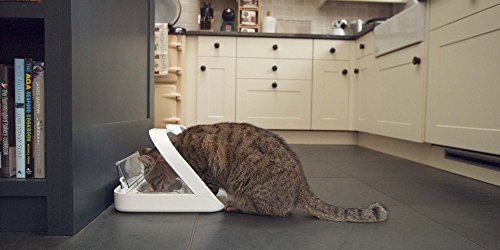 Some cats are sensitive to the noise and sudden motion of the feeder, so I recommend introducing your pet to it slowly. I let my cat try eating out of the dish for about a week without turning on any of the features so that he could get used to the unique style of the unit in a risk-free way.
When I could tell that he was comfortable with the unit in general, I introduced him to the lid movement using the hand Training Function button. While in training mode, the dish won’t close until after your pet is done eating. It took my cat about a week to get comfortable with the movement. As he got used to the movements and noises, I added movement to the lid according to the instructions in my user manual. There are 3 stages of lid movements in training mode and I gave my cat a week to get used to each setting before moving on to the next.
My feline companion was ready for the full movement of the dish after about 5 weeks of training, but each animal is different so your cat may need more or less training time than mine did. Patience is key here: You’ll want to be sure your pet is ready for the next step before moving on so you don’t accidentally scare them into not wanting to use the dish.
What if My Cat Doesn’t Like the Feeder?
If you take your time with the training process and your cat still won’t use the feeder, there are a few things you can investigate to see if you can make your cat feel more comfortable:
- You can try backing up to the beginning of the training process and taking it more slowly. Remember, this is a new experience for your cat and the noise and movement can make even the boldest pet feel a bit nervous.
- If the lid is closing too quickly for your cat to move away from the dish after eating, you can give them more time to get away from the dish by delaying the slider to its slowest setting.
- Make sure the feeder is in a good location for your cat. If you put the feeder in a different place from their old food dish, that change could be adding to your cat’s skittishness towards the unit.
Technical Difficulties
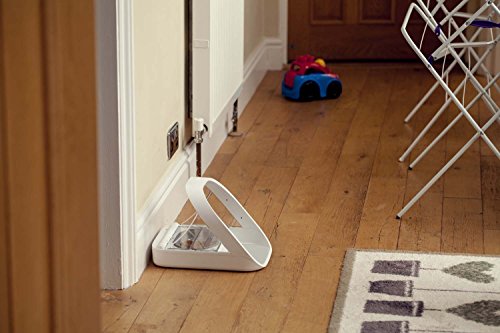 This microchip feeder has been a game changer for me, but occasionally things do go wrong